Sales: (844) 659-1212
Service: (450) 752-1212

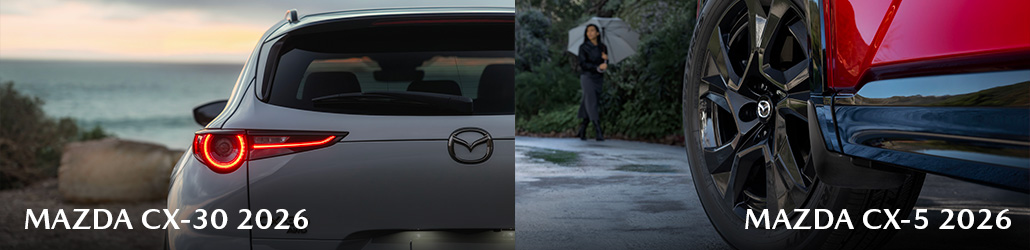
Choosing between the 2026 Mazda CX-30 and the 2026 Mazda CX-5 is not necessarily an easy decision. These two Japanese SUVs share a philosophy centred on driving enjoyment, interior refinement, safety and build quality. However, they differ in size, powertrains, cargo capacity and intended use. While the CX-30 emphasizes agility and sportiness, the CX-5 prioritizes versatility and family comfort, particularly with its completely redesigned generation for 2026.
For drivers in Joliette, Notre-Dame-des-Prairies and the Lanaudière region, choosing an SUV also means considering local conditions. From city driving and winter conditions to long drives along country roads and family getaways, needs can vary considerably.
At Mazda Joliette, discover the differences between these two SUVs to determine which one better suits your lifestyle, driving habits and budget.
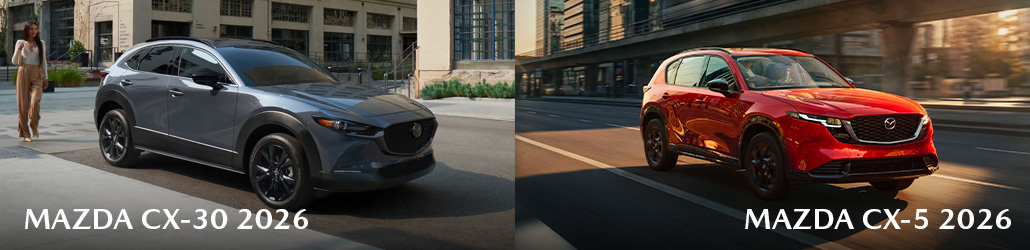
Although they belong to the same vehicle family, the Mazda CX-30 and Mazda CX-5 do not meet exactly the same needs. The CX-30 belongs to the subcompact SUV segment, while the CX-5 competes in the compact SUV segment. This difference is reflected in their exterior dimensions, interior space and cargo capacity.
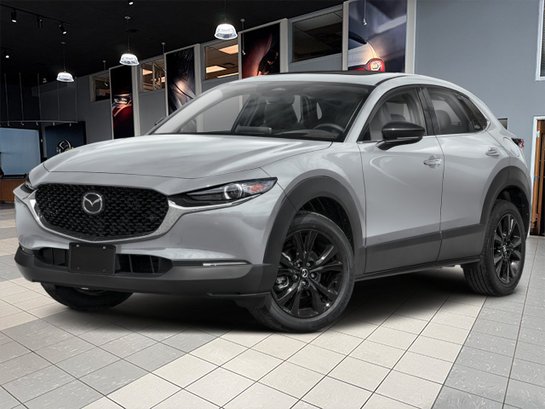
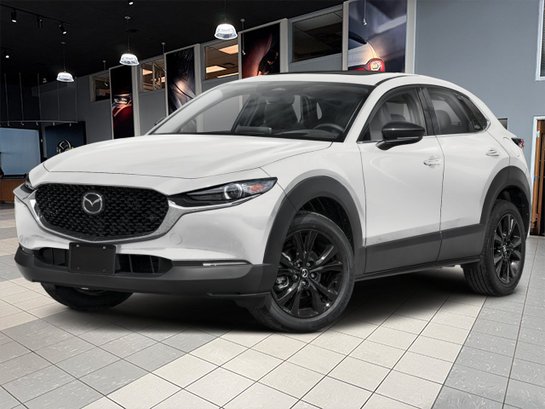
The 2026 Mazda CX-30 is primarily aimed at drivers looking for a versatile vehicle without sacrificing the manoeuvrability of a car. Its size is particularly well suited to young professionals, couples and small families. Its sporty silhouette, elevated driving position and engine options also make it an appealing choice for those who place a high value on driving enjoyment.
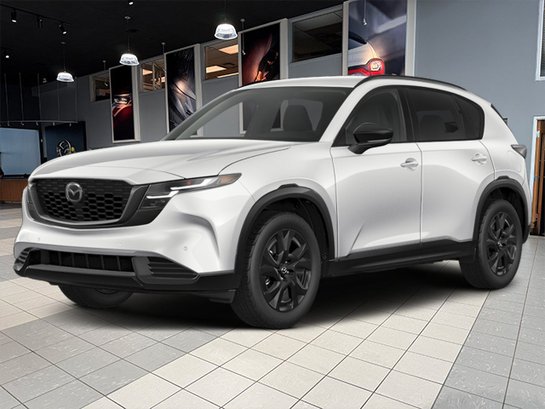
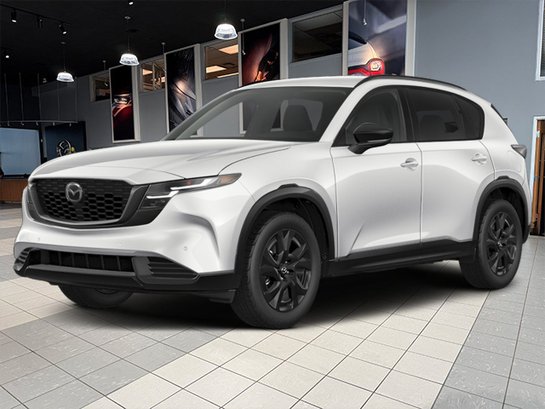
The 2026 Mazda CX-5, meanwhile, benefits from a major redesign that provides more space and a renewed technology experience. Its longer wheelbase, roomier cabin and spacious cargo area are particularly well suited to active families. It is also a sensible choice for drivers who plan to keep their vehicle for several years and anticipate changing needs.
The 2026 Mazda CX-30 offers two 2.5-litre Skyactiv-G gasoline engines. The naturally aspirated engine produces 186 horsepower and 186 lb-ft of torque. This configuration offers an appealing balance between performance and fuel economy while effectively meeting everyday driving needs.
For drivers who want more responsive acceleration, Mazda also offers a 2.5-litre turbocharged engine. It can produce up to 250 horsepower and 320 lb-ft of torque when running on 93-octane gasoline. With regular 87-octane gasoline, it still delivers 227 horsepower and 310 lb-ft of torque.
This engine gives the CX-30 a particularly dynamic character. Torque available at low engine speeds makes it easier to accelerate, pass other vehicles and merge onto highways. Drivers who regularly travel on Highway 40 or Highway 31 may particularly appreciate this reserve of power.
For its new generation, the 2026 Mazda CX-5 is equipped with a 2.5-litre Skyactiv-G four-cylinder engine producing 187 horsepower and 186 lb-ft of torque. This naturally aspirated engine prioritizes smooth, progressive power delivery, making it particularly well suited to family use and everyday driving.
Unlike the CX-30, the new-generation CX-5 does not offer a turbocharged engine at its 2026 launch. However, Mazda has confirmed the arrival of a hybrid powertrain for 2027. Consumers interested in a turbocharged Mazda SUV in 2026 will therefore find the CX-30 a particularly appealing option.
The CX-5 nevertheless remains well suited to long-distance driving, business travel and family outings. Its greater emphasis on comfort and versatility meets the expectations of drivers looking for a balanced ride rather than an overtly sporty experience.
The 2026 Mazda CX-30 and CX-5 are both equipped with a six-speed Skyactiv automatic transmission. Unlike some competitors that favour continuously variable transmissions, Mazda retains a conventional automatic gearbox that provides distinct gear changes and predictable acceleration response.
Both vehicles also come standard with i-Activ AWD. This technology monitors various driving conditions to adjust torque distribution between the front and rear wheels when necessary. It helps improve traction on slippery surfaces and when road conditions change.
In Lanaudière, where drivers must contend with snow, ice and fluctuating temperatures, this feature offers a valuable advantage. Whether you are driving through the streets of Joliette, along rural roads in Saint-Paul or towards Rawdon, both models offer a configuration suited to changing conditions.
It remains essential, however, to equip your vehicle with quality winter tires, since all-wheel drive does not replace the grip needed for braking and changing direction.
| Feature | 2026 Mazda CX-30 | 2026 Mazda CX-30 Turbo | 2026 Mazda CX-5 |
| Category | Subcompact SUV | Subcompact SUV | Compact SUV |
| Powertrain | 2.5 L 4-cylinder | 2.5 L turbocharged 4-cylinder | 2.5 L 4-cylinder |
| Horsepower | 186 hp | Up to 250 hp* | 187 hp |
| Torque | 186 lb-ft | Up to 320 lb-ft* | 186 lb-ft |
| Transmission | 6-speed automatic | 6-speed automatic | 6-speed automatic |
| Drivetrain | i-Activ AWD | i-Activ AWD | i-Activ AWD |
| City fuel consumption | 9.6 L/100 km | 10.5 L/100 km | 9.9 L/100 km |
| Highway fuel consumption | 7.5 L/100 km | 7.9 L/100 km | 7.9 L/100 km |
| Combined fuel consumption | 8.7 L/100 km | 9.3 L/100 km | 9.0 L/100 km |
| Length | 4,395 mm | 4,395 mm | 4,690 mm |
| Height | 1,568 mm | 1,568 mm | 1,695 mm** |
| Wheelbase | 2,652 mm | 2,652 mm | 2,815 mm |
| Seating capacity | 5 | 5 | 5 |
| Rear legroom | 922 mm | 922 mm | 1,012 mm |
| Rear cargo volume | 572 L | 572 L | 954 L |
| Maximum cargo volume | 1,280 L | 1,280 L | 1,882 L |
| Towing capacity | Not confirmed | Not confirmed | 680 kg (1,500 lb) |
| Hybrid powertrain in 2026 | No | No | No |
*Maximum horsepower and torque are achieved with 93-octane gasoline.
**CX-5 height includes the antenna. Specifications may vary by trim. Cargo volumes are those published by Mazda Canada according to the measurement methods applicable to each vehicle.
The 2026 Mazda CX-30 equipped with the naturally aspirated engine offers the best fuel economy in this comparison. With a combined average of 8.7 L/100 km, it slightly outperforms the 2026 Mazda CX-5, which has a combined fuel consumption rating of 9.0 L/100 km. The CX-30 Turbo, meanwhile, has a fuel consumption rating of 9.3 L/100 km in exchange for greater performance.
For drivers who regularly travel several kilometres between home and work, the naturally aspirated CX-30 is an appealing choice. Its highway fuel consumption of 7.5 L/100 km is particularly well suited to residents of Lanaudière who need to commute to Repentigny, Terrebonne or the Greater Montreal area.
Its more compact size is also an advantage for city driving. It allows you to enjoy the benefits of an all-wheel-drive SUV without necessarily having to contend with the dimensions of a larger family vehicle.
Despite its larger dimensions, the new Mazda CX-5 maintains fuel consumption relatively close to that of the CX-30. Its engine features the i-Stop system, which can temporarily shut off the engine when certain conditions are met while the vehicle is stopped.
Over an annual distance of 20,000 kilometres, the theoretical difference in fuel consumption between the naturally aspirated CX-30 and the CX-5 amounts to just 60 litres of gasoline. For a family looking to enjoy a more spacious cabin, this trade-off may therefore be particularly appealing.
It is important to keep in mind, however, that actual fuel consumption depends on several factors, including winter temperatures, driving habits, tire pressure and the weight being carried.
With a length of 4,395 mm, the 2026 Mazda CX-30 offers a size particularly well suited to drivers who prioritize easy parking and manoeuvrability. It is approximately 29.5 cm shorter than the CX-5, a noticeable difference when parking in a tight space or driving in an urban environment.
Its cargo area provides 572 litres of space behind the second row of seats. With that row folded down, capacity increases to 1,280 litres. This space adequately meets the needs of a couple, an individual or a small family primarily carrying groceries, suitcases or sports equipment.
For hiking enthusiasts looking to explore the trails of Rawdon or the natural areas of Lanaudière, the CX-30 offers an appealing balance between carrying capacity and driving enjoyment.
The new Mazda CX-5 stands out for its larger dimensions. Its 2,815-mm wheelbase helps provide more space for rear passengers, an important advantage for families with teenagers or young children.
Rear legroom reaches 1,012 mm, compared with 922 mm in the CX-30. This nine-centimetre difference can improve passenger comfort, particularly on long journeys.
Cargo capacity is another important selling point. The CX-5 offers 954 litres behind the rear seats and up to 1,882 litres when they are folded down, according to data published by Mazda Canada.
Whether you need to carry a stroller, hockey bags, vacation luggage or camping accessories, the CX-5 offers more possibilities. For families hoping to avoid replacing their vehicle as their needs evolve, this additional space is an advantage worth considering.

The Mazda CX-30 and Mazda CX-5 both adopt Mazda’s Kodo design language, which emphasizes flowing lines, clean surfaces and balanced proportions. However, each interprets this philosophy differently.
The CX-30 features a relatively low silhouette, a sleek profile and a sporty appearance reminiscent of certain Mazda3 styling elements. Its proportions allow it to stand out from traditional SUVs while retaining an elevated driving position. Kuro trims also add black styling accents that reinforce its dynamic character.
The 2026 Mazda CX-5, meanwhile, features a refreshed look. Its redesigned body, increased dimensions and modernized visual signature give it a more commanding presence on the road. Its design appeals to families as well as professionals looking for an elegant and versatile vehicle.
The choice therefore depends mainly on your preferences. The CX-30 emphasizes an agile, sporty silhouette, while the CX-5 offers a more substantial appearance without taking on the dimensions of a large SUV.
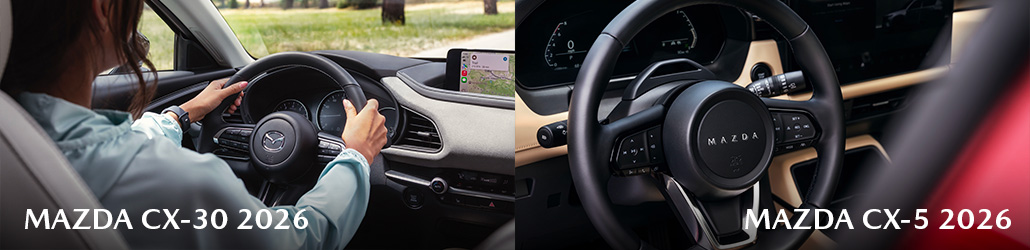
The 2026 Mazda CX-30 offers a technology environment designed to make essential vehicle functions easy to access. The GX trim notably features an 8.8-inch centre display and wired Apple CarPlay and Android Auto compatibility.
Starting with the GS trim, occupants can enjoy a 10.25-inch display, wireless connectivity for compatible smartphones and Qi wireless charging. These features make navigation apps, music services and communications easier to use while travelling.
Depending on the selected trim, the CX-30 also offers a 12-speaker Bose audio system, a head-up display and a 360-degree view monitor. These features help enrich the driving experience while providing greater everyday convenience.
The Mazda CX-5 undergoes a significant technological transformation for 2026. Its 12.9-inch centre display is standard, while a 15.6-inch touchscreen is offered with the GT trim’s Premium Package.
Google integration also provides access to navigation and voice-assistance features. Some connected features may require a subscription after the trial period or specific connectivity conditions.
The CX-5 also offers Apple CarPlay and Android Auto compatibility, as well as a 12-speaker Bose audio system in the GT trim.
For drivers who appreciate large digital interfaces and the latest connectivity technology, the CX-5 therefore has an advantage. The CX-30 nevertheless remains appealing to those who prefer a more conventional technology environment.
The Mazda CX-30 offers a cabin with a primarily driver-focused layout. The arrangement of the controls, seating position and dashboard design help create a cocoon-like atmosphere. Materials and equipment vary by trim, allowing consumers to choose between a functional configuration and a more refined interior.
Heated front seats are particularly welcome on cold Quebec mornings. Depending on the trim, the CX-30 also offers a heated steering wheel, dual-zone automatic climate control and a driver’s seat with position memory.
The Mazda CX-5 places more emphasis on comfort for all occupants. The additional rear space makes travelling with several passengers and installing child seats easier. Its cabin is also an advantage for people who regularly use their vehicle for carpooling or family trips.
Depending on the configuration selected, the CX-5 may offer a panoramic roof and various additional comfort features. Drivers who travel long distances between Joliette and the various municipalities of Lanaudière will particularly appreciate the opportunity to enjoy a more spacious interior.
Both Mazda SUVs feature safety and driver-assistance technologies grouped under the i-Activsense name. These systems are designed to support the driver and help reduce certain risks associated with everyday traffic.
Depending on the trim, the Mazda CX-30 notably offers blind spot monitoring, braking assistance, adaptive cruise control and lane-keeping assistance.
The 2026 Mazda CX-5, meanwhile, benefits from an updated suite of technologies. Standard features notably include emergency lane keeping, blind spot monitoring, traffic sign recognition and radar cruise control with a speed limiter.
These technologies are particularly appealing to drivers who travel through varied environments, from the streets of Saint-Charles-Borromée to more rural roads towards Saint-Félix-de-Valois.
Thanks to their standard all-wheel drive, both models also offer useful features for handling Quebec winters. Their main differences lie more in their size and intended use than in their ability to meet normal winter driving needs.
Driver-assistance systems, however, never replace driver attentiveness or the need to adjust speed to road conditions.
The CX-30 lineup offers a choice of several trim levels, including GX, GS, GS Kuro, GT, GT Turbo and GT Kuro.
The GX trim is an appealing entry point for consumers looking for an all-wheel-drive SUV equipped with essential features. The GS trim adds several comfort and connectivity features, making it a particularly well-balanced option for everyday use.
Kuro trims offer distinctive styling, while GT trims place greater emphasis on refinement, technology and premium equipment. Turbocharged configurations are primarily aimed at drivers who prioritize performance.
The new-generation Mazda CX-5 is offered in Canada in GX, GS and GT trims, with various optional packages depending on the configuration.
The GX trim allows drivers to benefit from the vehicle’s new architecture and its main technological innovations. The GS trim is an appealing option for families looking for additional conveniences, while the GT trim prioritizes a more refined experience.
Since all these trims share the same engine and all-wheel-drive configuration, the choice depends mainly on comfort features, technology and budget.
To discover the configurations currently offered, browse our new Mazda vehicle inventory in Joliette.
The Mazda CX-30 generally has a lower starting price than the CX-5. Its position in the subcompact SUV segment makes it an accessible option for consumers who want to explore the Mazda lineup without necessarily investing in a larger family vehicle.
However, the purchase price represents only part of the cost of ownership. Fuel consumption, insurance, maintenance, tires and additional equipment should also be considered.
A CX-30 equipped with a turbocharged engine and numerous premium features can have a price comparable to that of certain CX-5 configurations. It is therefore preferable to compare vehicles based on their actual equipment rather than focusing solely on their starting prices.
Our team can help you compare the different purchase and leasing options. You can also explore our auto financing solutions to discover options suited to your budget.
If you drive primarily in the city, occasionally carry passengers and appreciate vehicles that are easy to manoeuvre, the CX-30 is an excellent candidate. Its smaller size and favourable fuel economy with the naturally aspirated engine are well suited to the needs of active drivers.
It is also an appealing transition for sedan or hatchback owners who want an elevated driving position and all-wheel drive without moving directly to a larger SUV.
For enthusiasts who enjoy dynamic driving, the CX-30 Turbo has an undeniable advantage over the 2026 CX-5 in terms of maximum horsepower. Its generous torque and compact dimensions give it a sporty personality within the Mazda lineup.
This configuration is particularly well suited to drivers for whom performance and driving enjoyment are top priorities.
If you have children, regularly carry passengers or plan to take several family trips, the CX-5 generally represents the more versatile choice.
Its roomier cabin, greater cargo capacity and updated technology effectively meet the needs of modern families. It is also well suited to dog owners and outdoor enthusiasts who regularly carry bulky equipment.
From cottage stays and water activities to ski outings and camping weekends, Lanaudière offers numerous opportunities for outdoor enthusiasts.
The Mazda CX-5 allows you to carry more equipment while retaining five seats. Its 1,500-lb towing capacity can also meet certain light-duty towing needs, provided that the manufacturer’s limits and recommendations are followed.
The Mazda CX-30 is a subcompact SUV focused on agility and sportiness, while the Mazda CX-5 is a compact SUV geared more towards family comfort and versatility. The CX-5 notably offers a roomier cabin and greater cargo capacity.
The 2026 Mazda CX-30 equipped with the naturally aspirated 2.5-litre engine is the most fuel-efficient vehicle in this comparison, with combined fuel consumption of 8.7 L/100 km, compared with 9.0 L/100 km for the 2026 Mazda CX-5.
In its turbocharged configuration, yes. The CX-30 Turbo produces up to 250 horsepower and 320 lb-ft of torque with the appropriate fuel, while the 2026 CX-5 produces 187 horsepower and 186 lb-ft of torque. However, the naturally aspirated versions of both models offer comparable horsepower.
Both models are suited to winter driving thanks to standard i-Activ AWD. The CX-30 prioritizes manoeuvrability, while the CX-5 offers more space and ground clearance of 204 to 209 mm, depending on the wheels. Appropriate winter tires remain essential in both cases.
The 2026 Mazda CX-5 has the largest cargo area, with a published maximum volume of 1,882 litres when the rear seats are folded down. The Mazda CX-30, meanwhile, offers a maximum capacity of 1,280 litres, according to Mazda’s published measurement method.
No. The new-generation Mazda CX-5 is launching with a naturally aspirated 2.5-litre engine. Mazda has confirmed the arrival of a hybrid powertrain for 2027. Consumers looking for a turbocharged engine can consider the 2026 Mazda CX-30, among other options.
You can discover both SUVs at Mazda Joliette, located at 560 Route 131 in Notre-Dame-des-Prairies. Our team can introduce you to the different trims, compare their equipment and assist you during your test drives, subject to availability.
Choosing between the 2026 Mazda CX-30 and Mazda CX-5 ultimately depends on your priorities. The CX-30 stands out for its compact size, agility, fuel efficiency and available turbocharged engine. The CX-5, meanwhile, offers more space, generous cargo capacity and an updated technology experience for 2026.
Whether you live in Joliette, Notre-Dame-des-Prairies or elsewhere in Lanaudière, our team is available to help you determine which Mazda SUV truly meets your needs.
Explore our new Mazda vehicle inventory or book your test drive at Mazda Joliette today to compare these two models and find the one that will accompany you on all your adventures.
Error: Contact form not found.
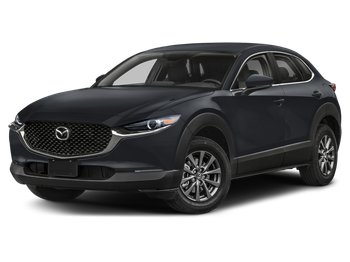
November 3–30, 2026
Lease from$89Taxes, registration, licence, insurance and specific duty on new tires extra.
per week for 48 months at 2.49% APR
with a down payment of $1,525
Retail price
$30,940
on the 2026 Mazda CX-30 GX i-ACTIV AWD$500 Year-end Event Bonus already included in the price. 20,000 km/year. On approved credit.
* Photo for illustrative purposes only. Certain conditions apply.